
When is a Stair Lift the Right Choice for your home?

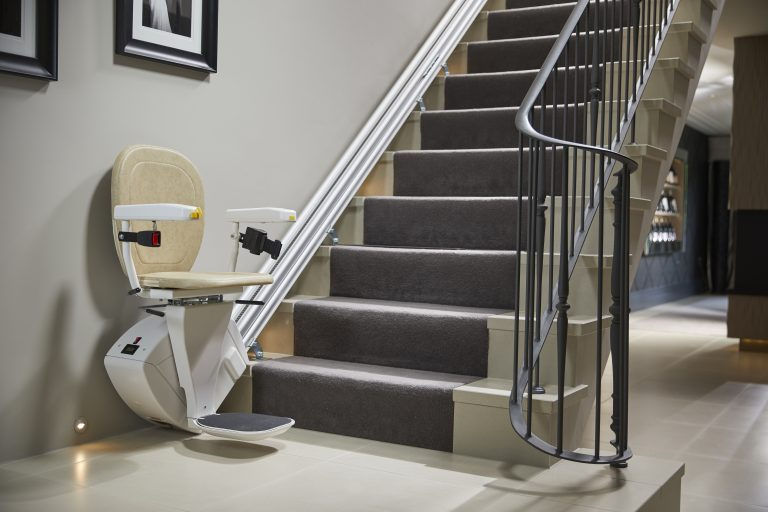
As mobility changes, stairs are often the first major obstacle inside the home. For many families, the question becomes: Is it time for a stair lift, or is there another option that makes more sense?
A stair lift can be an excellent solution — but it’s not the right choice for everyone. Understanding when a stair lift makes sense, who it’s best for, and what alternatives exist can help families make a confident decision.
What Is a Stair Lift?
A stair lift is a motorized chair that travels along a rail mounted to your staircase. It allows someone to move safely between floors without needing to climb stairs independently.
Most stair lifts include:
A seated chair with armrests
A seatbelt for safety
Controls on the armrest or wall
Folding components to reduce obstruction when not in use
They are commonly used in private homes and can be installed on straight or curved staircases.
When a Stair Lift Is a Good Fit
A stair lift may be the right solution if one or more of the following applies:
1. Stairs Are the Primary Barrier
If the individual can walk short distances but struggles specifically with stairs, a stair lift often solves the problem without major home changes.
2. The Home Has Multiple Essential Levels
If the bedroom or bathroom is upstairs and relocating them to the main level isn’t practical, a stair lift can preserve normal routines.
3. Standing Balance Is Unreliable
For individuals with balance issues, fatigue, joint pain, or neurological conditions, climbing stairs increases fall risk — even with railings.
4. Wheelchair Use Is Not Required Indoors
Stair lifts are ideal for people who can transfer into a chair but do not need a wheelchair inside the home.
5. A Quick Solution Is Needed
Compared to remodeling or relocating living spaces, stair lifts can often be installed relatively quickly.
When a Stair Lift May Not Be the Best Option
A stair lift isn’t always the right choice. Other options may be better if:
The individual cannot safely transfer into a seated position
The staircase is very narrow or steep
A wheelchair is needed on multiple levels
Long-term needs are expected to change significantly
There are structural or clearance limitations
In these cases, alternatives like ramps, vertical platform lifts, or main-level modifications may be more appropriate.
Straight vs Curved Stair Lifts: What’s the Difference?
Straight Stair Lifts
Used on staircases with no turns or landings
Typically more affordable
Faster to install
Most common option
Curved Stair Lifts
Designed for stairs with turns, landings, or spirals
Custom-built to match the staircase
Higher cost due to customization
Longer lead time
An in-home assessment helps determine which type is feasible.
Safety and Comfort Considerations
Modern stair lifts are designed with safety in mind. Key features often include:
Obstruction sensors
Locking swivel seats for safe transfers
Smooth start-and-stop motion
Battery backup for power outages
Comfort is also important. Seat height, armrest position, and control placement should match the user’s abilities.
How Stair Lifts Compare to Other Accessibility Options
Option | Best For |
Stair Lift | Walking individuals with stair difficulty |
Wheelchair Ramp | Wheelchair or walker users entering/exiting the home |
Vertical Platform Lift | Wheelchair users needing multi-level access |
Home Modifications | Long-term aging-in-place planning |
Choosing the right solution depends on current ability, future needs, and home layout.
What to Expect During a Stair Lift Assessment
A professional assessment typically includes:
Measuring the staircase
Evaluating transfer ability and safety
Reviewing power access
Discussing short- vs long-term needs
Identifying potential alternatives
The goal is not to sell equipment — it’s to ensure the solution actually fits the situation.
Next Steps
If stairs are becoming a daily challenge, it may be time to explore options before a fall or injury occurs.
Not sure if a stair lift is the right choice? Contact us to schedule a free home accessibility assessment and get guidance tailored to your home and needs.


Comments