
How Do You Get a Wheelchair Into a House With Steps? (Wisconsin Guide)


🏡 When Steps Become a Barrier
If you or a loved one is coming home from the hospital and using a wheelchair, even one or two steps at the entrance can become a major obstacle.
This is something we see all the time across Waukesha and Milwaukee. Many homes—especially split-levels or homes with raised garages—weren’t designed with accessibility in mind.
And in most cases, the question becomes urgent:
“How are we going to safely get them into the house?”
⚠️ Why Steps Are a Serious Safety Risk
Trying to “make it work” without the right setup can quickly lead to:
Falls or near-falls
Caregiver strain or injury
Unsafe lifting or maneuvering
Loss of independence
Even a short set of steps can make it nearly impossible to safely enter or exit the home in a wheelchair.
✅ The Most Common Solutions
There’s no one-size-fits-all answer—but here are the three most effective options depending on your situation:
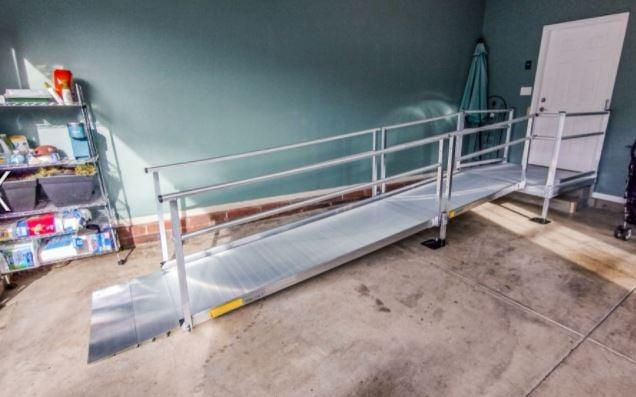
Best for:
Recent hospital discharge
Short-term or uncertain recovery
Immediate access needs
Why this works:
Can often be installed quickly
Flexible setup depending on the home
Ideal for garage or side entry access
💬 In many cases, this is the fastest way to safely get someone home without delay.
2. Permanent Modular Wheelchair Ramps
Best for:
Long-term mobility needs
Full-time wheelchair use
Homeowners planning to age in place
Why this works:
Durable and built for year-round use
Custom-fit to your home layout
Safer and more stable long-term solution
3. Vertical Platform Lifts (When Space Is Limited)
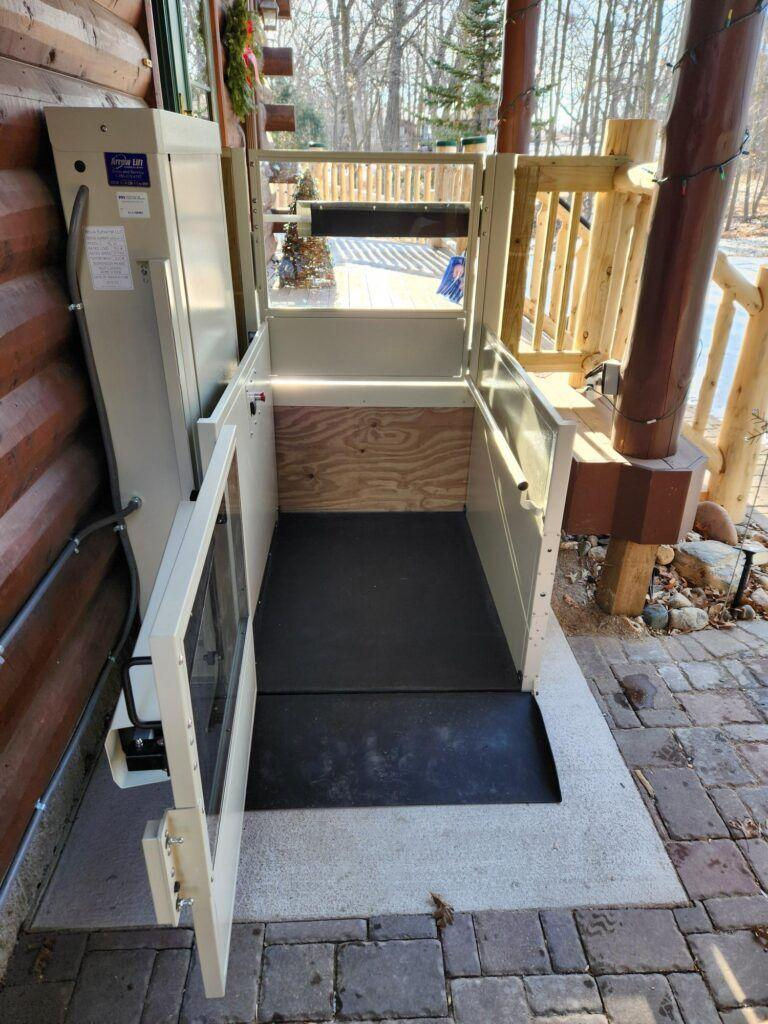
Best for:
Homes without enough space for a ramp
Higher entry points (porches, decks)
Situations where a long ramp isn’t practical
Why this works:
Takes up less space than a ramp
Lifts the wheelchair vertically
Clean, compact solution
🔑 What Most People Don’t Realize
One of the biggest surprises for homeowners is how much space a ramp actually requires.
For safety, ramps are typically built at a 1:12 slope. That means:
12 inches of ramp for every 1 inch of rise
Just 2–3 steps can require 12–18 feet of ramp
Ramp Length=12×Rise
That’s why in many Wisconsin homes:
The garage entry is often the best option
Temporary solutions make more sense at first
Weather (snow + ice) plays a big role in safety
🧠 How We Help You Choose the Right Solution
Most families start by asking about a specific product—but the real question is:
Where is the actual barrier?
In our assessments, we look at:
Strength and balance
Ability to transfer in and out of a chair
Caregiver support
Home layout (garage vs front entry)
Short-term vs long-term needs
💬 In many cases, the best solution isn’t just about equipment—it’s about matching the right setup to the person and the home.
📍 A Real Example from Waukesha
We recently helped a family whose loved one was being discharged from rehab.
2 steps at the garage entrance
Wheelchair needed immediately
Limited space at the front door
We installed a temporary modular ramp at the garage within a few days—allowing for safe entry while they figured out longer-term plans.
👍 The Bottom Line
If you’re trying to get a wheelchair into a home with steps, you have options—but the right solution depends on:
The home
The person
The timeline
And getting it right early can make a huge difference in safety and independence.
📞 Need Help Figuring It Out?
At Four Corners Mobility, we provide local, OT-guided home accessibility solutions across Southeast Wisconsin.
✔ Fast turnaround
✔ Honest recommendations (no pressure)
✔ Installed by a local professional


Comments